
Important Gut Bacteria You've Never Heard Of
What a massive new study tells us about the 60% of your gut nobody has studied

Disclaimer: I’m not a medical doctor. This is not medical advice and is for informational purposes only. Everything shared here is based on my personal experience. Always do your own research and consult a qualified practitioner before making changes to your own routine.
Your microbiome is one of the most important factors in your digestive health. And it’s not just digestive health. Immune function, mental health, hormonal balance, skin, energy, metabolism and much more.
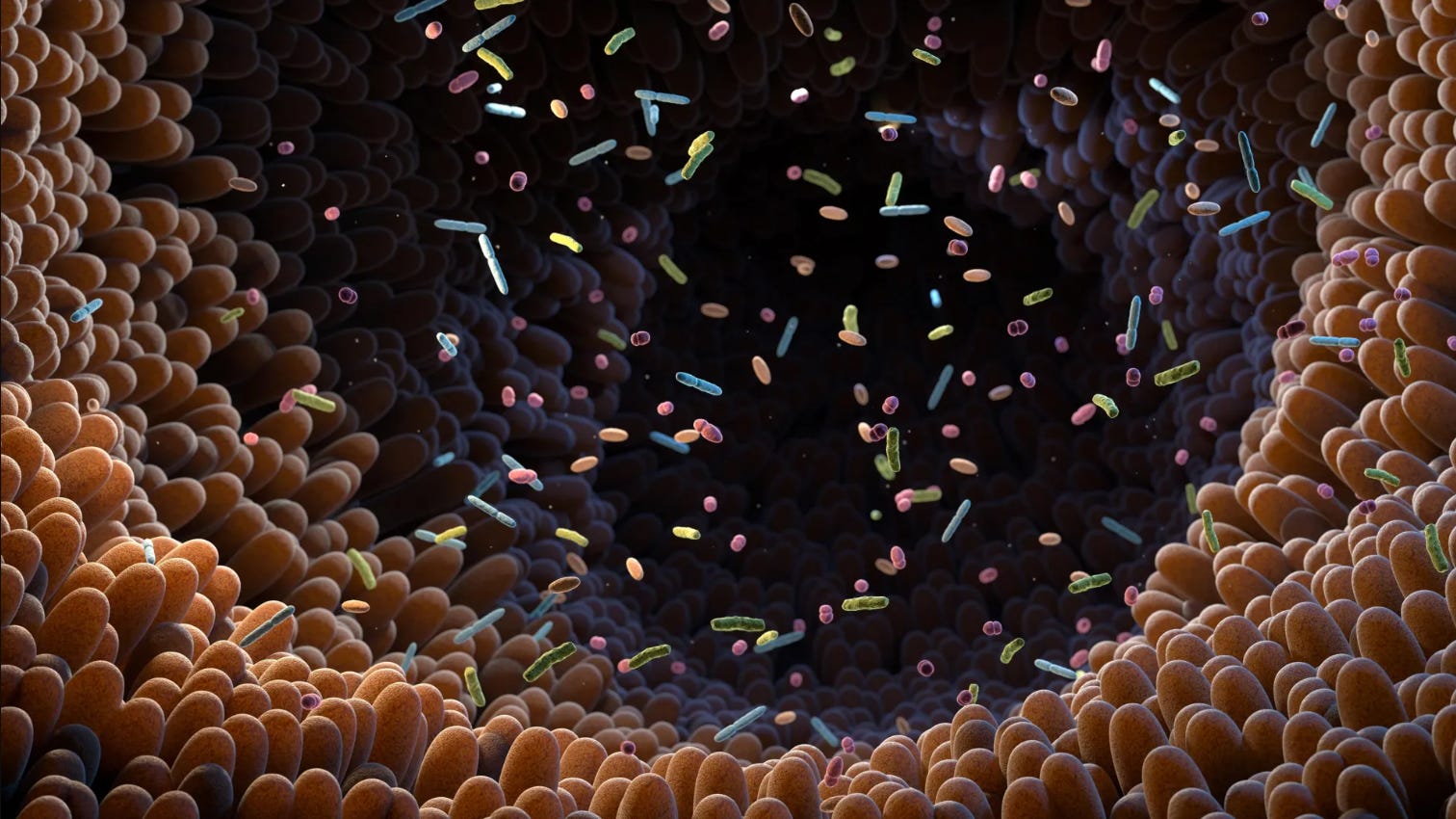
Your microbiome houses trillions of bacteria, fungi, viruses and other microbes. This ecosystem does way more than just help you digest food.
It produces short-chain fatty acids that fuel the cells lining your intestine. It synthesizes vitamins your body can’t make on its own. It trains your immune system to distinguish between a harmless food components and an actual pathogen. It produces and is involved in regulating neurotransmitters like serotonin. Roughly 70-80% of your immune cells live in and around your gut and the microbiome is constantly communicating with it.
When the microbiome is balanced and diverse, it helps these systems run smoothly. When it’s disrupted, things unravel both in and outside of the gut.
This is why so many chronic health issues that seem unrelated to digestion (brain fog, skin conditions, hormonal dysfunction, autoimmune flares, chronic fatigue) are often tied into gut health in one way or another.
Most people don’t understand this. And because they don’t, they spend years chasing individual symptoms without ever addressing what’s quietly driving them.
A massive amount of research over the past two decades has focused on the microbiome for exactly this reason. We know it matters. We know disrupting it has consequences. We know that restoring it can resolve or help resolve conditions that nothing else touched.
But here’s what a study published earlier this year made very clear: we are still in the early chapters of fully understanding the gut microbiome.
There are likely many important players involved here that we still know almost nothing about.
60% of Your Gut Has Never Been Studied
For most of the history of microbiology, the only way to study bacteria was to grow them in a lab. You take a sample, put it in a petri dish, give it fuel it needs to survive, control the temperature and wait.
Whatever grows, you can study deeper. Whatever doesn’t, you can’t (at least not to the same extent).
The problem is that over 60% of the bacteria living in your gut have never been successfully grown in a lab. The majority of gut bacteria are obligate anaerobes, meaning they can’t grow or reproduce when they’re exposed to conditions outside the gut.
Many of these microbes require extremely specific conditions to survive: precise pH, the right temperature, cross-feeding and relationships with other bacteria that we can't replicate in a lab.
That means for decades, the only gut bacteria we could study in any depth were the ones we could grow in a dish. The majority of the microbiome was essentially unkown to us.
Think about that for a second. We’ve built an entire field of probiotic supplements, microbiome testing and gut health protocols around the 40% of bacteria we can legitimately study. The other 60% has largely been a black box.
This started to change with testing methods like metagenomics. Instead of trying to grow bacteria, you extract the DNA from a stool sample and sequence it.
Every organism in there, living or dead, culturable or not, leaves a genetic fingerprint. Metagenomics reads those fingerprints.
A quick note here because I get a ton of questions about this: metagenomics and qPCR (which is the technology behind the GI-MAP and the preferred method in many cases) are different tools for different jobs.
qPCR is considered by many to be the gold standard for quantifying known microbes. It's precise, it's validated and it gives you specific numbers on specific microbes. That level of detail matters because not all microbes are the same.
With pathogens, they don't all respond to the same treatments. Some require more aggressive approaches, others don't. And the same is true on the beneficial side. There are commensal bacteria we've isolated, studied and understand well enough to know exactly what supports or depletes them.
qPCR can tell you how much of each one you have, which is why it can be so useful for building targeted protocols, especially in complex cases or when you need to go after a specific pathogen. These are the microbes we've formally identified, cultured and characterized over decades of research. We know their behavior and what moves the needle on them (generally speaking).
But qPCR can only measure what you already know to look for. You have to design a primer for each target, which means if a microbe hasn't been formally characterized yet, it won't show up.
Metagenomics is a discovery tool. It captures everything in the sample, including organisms nobody has formally identified yet. It’s how you find things you didn’t know to look for.
Both are valuable.
What metagenomics has shown us is a completely different picture of what's living in the gut. Researchers used this to catalog the hidden microbes and found over 3,000 species that had never been seen before.
Over 3,000 species that have been living inside human guts this entire time, and we had no idea they were there.